Safe Home Foods for Kittens (Short-Term Feeding Tips)
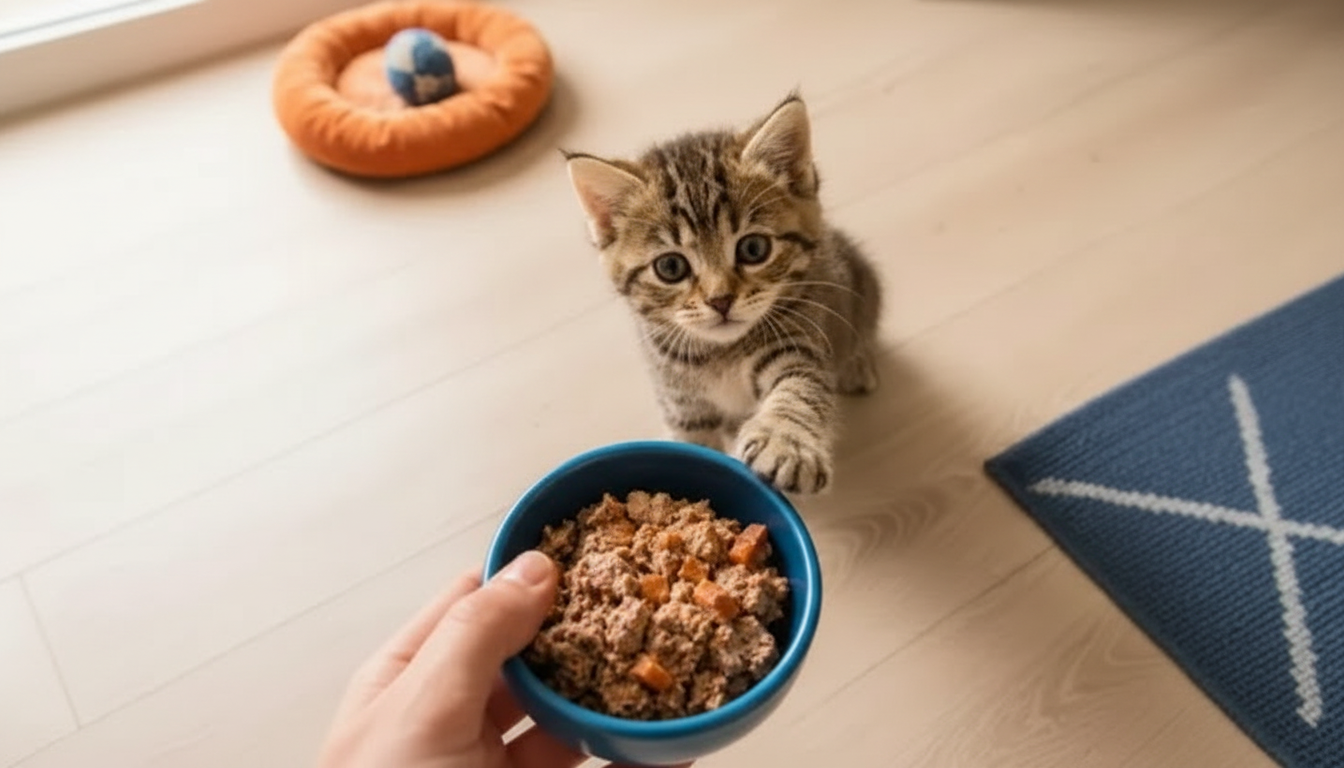
What home food can you give kittens?
Kittens do best on a complete, kitten-formulated food, but if you need a short-term, at-home option, stick to simple, gentle foods and keep portions small. Very young kittens (generally under 4 weeks) should not be fed “home foods” at all—only kitten milk replacer and an age-appropriate feeding schedule. If you’re not sure where your kitten falls, follow the step-by-step guidance in the main feeding guide: new kitten feeding guide and first foods schedule.
Safe, short-term home foods for kittens
If your kitten is already eating solid food (often around 5–8 weeks), these options can work briefly while you transition to proper kitten food:
- Plain, cooked chicken or turkey (boneless, skinless, unseasoned), finely shredded and mixed with warm water.
- Plain cooked egg (scrambled or boiled, no salt, butter, or oil), served in tiny bites.
- Plain, fully cooked fish (boneless, no seasoning) only occasionally; fish shouldn’t be the main staple.
- Unseasoned meat baby food (check ingredients: meat and water/broth only; no onion or garlic). This is often one of the easiest temporary options.
How to serve it
Offer food warm (not hot) and slightly moist. Many kittens eat better when the texture is soft—mix shredded meat with warm water to make a slurry. Feed small portions multiple times a day and remove leftovers after 20–30 minutes to prevent spoilage.
Foods to avoid
Skip anything seasoned or rich. Avoid cow’s milk, cheese, deli meats, raw meat/eggs, bones, and anything containing onion, garlic, chives, grapes/raisins, chocolate, or xylitol. These can trigger stomach upset or worse.
When to switch to kitten food
Home foods don’t provide the balanced calcium, taurine, and calories kittens need for growth. Use them only as a bridge and transition to a complete kitten diet as soon as possible. The linked guide includes age-based portions and pacing to help prevent tummy trouble.
FAQ
How often should a kitten eat each day?
Most weaned kittens need several small meals daily, often 3–4 feedings depending on age and appetite. Very young kittens who aren’t fully weaned need more frequent, scheduled feedings with kitten milk replacer.











Leave a comment