New Kitten Feeding Guide: First Foods & Easy Schedule
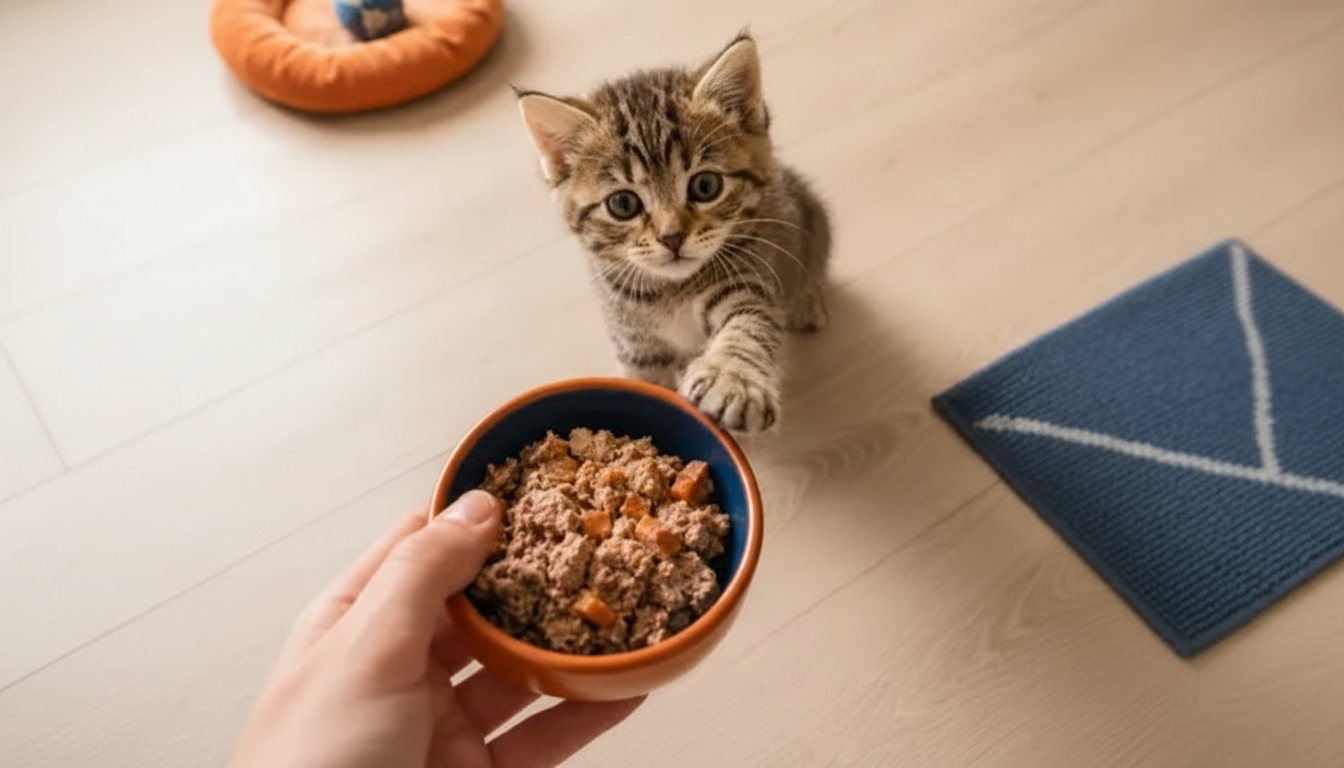
Feeding Your New Kitten Right: What to Start With for Healthy Growth and Calm Mealtimes
A new kitten’s first months set the foundation for growth, immunity, digestion, and lifelong eating habits. The goal is simple: offer complete kitten nutrition, keep meals consistent, and adjust portions as your kitten’s body and appetite change. Below is a practical, calm approach to what to feed, how often to feed, and how to avoid the most common early mistakes—plus an easy first-week plan for a smooth start.
Start with the basics: what kittens need in every bite
When you’re choosing a starter food, prioritize a label that says the diet is “complete and balanced” for “growth” or “all life stages.” Kitten-specific formulas are often the easiest choice because they’re designed to be more calorie-dense and nutrient-rich per bite—exactly what fast-growing bodies need.
Kittens require more protein, fat, and calories per pound than adult cats. Look for animal-based protein, taurine (essential for heart and eye health), essential fatty acids including DHA (brain and vision development), and the right calcium/phosphorus balance for bones and teeth. Moisture matters too: many kittens do better with more hydration early on, especially if they’re not big water drinkers yet.
Avoid foods labeled “intermittent or supplemental” as the main diet. Those are not intended to meet all growth needs and can leave important nutritional gaps during a critical development window.
Wet, dry, or a mix: choosing the format your kitten will thrive on
Wet food is a strong starting point for many kittens because it supports hydration and is usually easy to chew and digest. It can also help kittens who are hesitant to eat in a new environment, since aroma and texture are often more inviting.
Dry food is convenient and calorie-dense, which can be helpful for busy households—just measure it carefully. A little extra kibble can add up fast, especially as kittens get closer to adolescence.
A mixed routine (wet meals plus a measured amount of dry) can combine the benefits of both: better hydration and palatability from wet food, and convenience from kibble. If your kitten is very young and still transitioning off milk, start with softer textures (wet food or moistened kibble) and gradually increase firmness as chewing improves.
Age-by-age feeding guide for the first months
Under 4 weeks
Kittens this young should have only kitten milk replacer (KMR) unless a veterinarian directs otherwise. Never use cow’s milk—it commonly causes digestive upset.
4–6 weeks
This is weaning time. Offer a slurry made from wet kitten food blended with KMR or warm water. Keep meals small and frequent, and expect a little mess while your kitten learns.
6–12 weeks
Transition to regular wet kitten food and/or softened kibble. Keep meal structure (set times) while still offering generous portions to support growth. This is also a good time to begin gentle treat limits so treats don’t crowd out balanced nutrition.
3–6 months
Appetite often peaks here. Maintain multiple meals per day and watch body condition and weekly weight trends rather than relying on an empty bowl as the only clue.
6–12 months
How much and how often: build a simple routine that prevents overeating or underfeeding
Quick feeding schedule by age (general starting point)
| Kitten age | Meals per day | Food texture | Notes |
|---|---|---|---|
| Under 4 weeks | Bottle feeding every 2–4 hours | Kitten milk replacer only | Seek veterinary guidance; monitor hydration and weight closely |
| 4–6 weeks | 4–6 small meals | Slurry (wet kitten food + KMR/warm water) | Gradually thicken slurry; offer fresh water nearby |
| 6–12 weeks | 4 meals | Wet kitten food; softened kibble optional | Aim for consistency; start gentle treat limits |
| 3–6 months | 3 meals | Wet, dry, or mix | Weigh weekly; appetite often increases |
| 6–12 months | 2–3 meals | Wet, dry, or mix | Adjust portions as growth slows; reassess at spay/neuter |
Setting up happy mealtimes: stress-free feeding habits
Safe treats and add-ons (and what to avoid)
Avoid onions, garlic, grapes/raisins, chocolate, alcohol, xylitol, and highly salty or spiced foods. Skip bones and fatty table scraps; they can cause choking, pancreatitis risk, or digestive upset. For a reliable list of dangerous foods, reference the ASPCA’s guidance on people foods to avoid.
Common feeding problems and what to do next
Rapid weight gain: Measure portions, limit treats, reassess calorie density, and discuss a growth-appropriate plan at vet visits. For broader nutrition principles, the WSAVA Global Nutrition Guidelines are a helpful reference point for evaluating diets.
A practical first-week plan for a new kitten
Vet visit: Schedule a veterinary appointment soon after adoption to confirm body condition, parasite control, and a tailored feeding target. The American Association of Feline Practitioners (AAFP) provides kitten care resources that can help you know what to ask.
Extra support for calm routines (optional resources)
If you want a step-by-step reference you can keep on hand while you build your routine, Feeding Your New Kitten Right: Essential Kitten Nutrition eBook walks through weaning basics, portions, wet/dry balance, and common mistakes—useful when you’re switching foods or troubleshooting picky eating.
For households where noise or sudden activity disrupts mealtimes, consider reducing environmental stressors. Helping Pets Handle Vacuum Stress can be a practical add-on if your kitten startles easily and struggles to settle into a calm eating routine.
FAQ
What home food can you give kittens?
Tiny portions of plain cooked chicken or turkey (no seasoning) or small amounts of plain cooked egg are generally safe, but complete and balanced kitten food should make up the majority of the diet. Avoid onion/garlic, salty foods, fatty scraps, and bones, and ask a veterinarian before relying on homemade meals as a regular plan.











Leave a comment