Stop Vacuum Panic: Calm Dogs & Cats With 5 Easy Steps
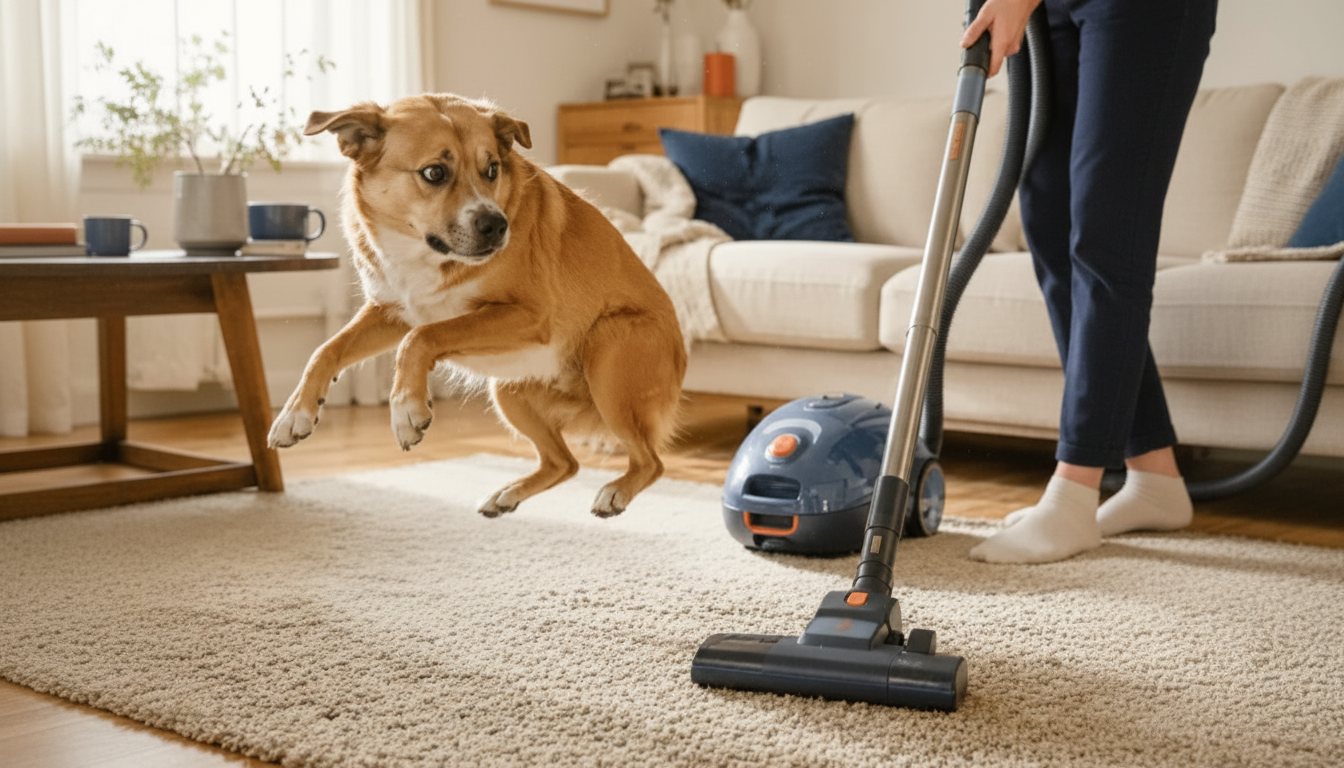
Helping Pets Handle Vacuum Stress: Calm, Safe Cleaning Without the Panic
Many dogs and cats react to vacuums with fear, barking, hiding, swatting, or trying to chase the machine. The goal isn’t to “toughen them up,” but to teach that the vacuum is predictable, controllable, and followed by good things—while keeping everyone safe during cleaning. For more guidance, see Fearful dogs | Cornell University College of Veterinary Medicine.
What Vacuum Stress Looks Like (and Why It Matters)
Vacuum stress can look “annoying” on the surface, but it’s often real fear or conflict behavior. When a pet repeatedly experiences intense panic, the response can become stronger over time—especially if there’s no clear escape route or the event feels unpredictable. For further reading, see From Stress to Serenity: OSU expertise helps Lucy the dog thrive ….
Common signs in dogs
- Barking, growling, lunging, herding/chasing the vacuum
- Trembling, panting, tucked tail, pacing, drooling
- Trying to block the vacuum or “guard” a family member
Common signs in cats
- Hiding, flattened ears, dilated pupils, tail flicking
- Hissing, swatting, bolting, refusing food
- Spraying/marking after loud events or increased clinginess
Beyond stress, there are practical safety concerns: bites or scratches if a frightened pet is cornered, ingestion of debris “rescued” from the floor, tangled cords, and injuries from chasing the moving unit.
Why Vacuums Trigger Pets
Most pets aren’t “being dramatic”—vacuums combine several things animals tend to dislike.
- Noise sensitivity: Vacuums can be loud and sharp, with higher-frequency components that are particularly aversive to sensitive ears.
- Unpredictable movement: The vacuum changes direction quickly and may seem like it’s “pursuing” a pet as you clean around furniture.
- Scent and airflow: Motor odor, dust release, and blasts of air can feel irritating or threatening (especially for cats who rely heavily on scent cues).
- Past learning: A pet may have been startled as a puppy/kitten, accidentally bumped, or repeatedly confined right before vacuuming—creating a lasting association.
For more pet behavior guidance and when to seek support, consult resources from the American Veterinary Medical Association (AVMA) and training articles from the ASPCA.
Set Up a Calm, Safe Cleaning Routine
Before training, set the environment so your pet has a reliable “plan” every time the vacuum comes out.
A Step-by-Step Desensitization and Counterconditioning Plan
Step 1: Vacuum off (presence only)
Step 2: Movement without sound
Step 3: Sound at a distance
Step 4: Sound nearby (pet stays in control)
Step 5: Real cleaning in tiny doses
Two-Week Practice Schedule (Adjust to Your Pet’s Pace)
| Day range | Goal | What to do | Success signal |
|---|---|---|---|
| Days 1–3 | Vacuum becomes boring | Vacuum stays off; treat for looking at it and calm sniffing | Loose body, normal breathing, will eat |
| Days 4–6 | Movement feels safe | Roll vacuum slightly; treat after each movement; stop early | Pet chooses to stay nearby |
| Days 7–9 | Noise at a distance | Turn vacuum on in another room for 1–2 seconds; treat during sound | No fleeing/hiding; takes treats |
| Days 10–12 | Noise in same room (far) | Vacuum on at maximum distance; treat continuously; stop while calm | Ears neutral, relaxed posture |
| Days 13–14+ | Short real vacuuming | Vacuum small section; pause; reward; gradually increase time | Recovers quickly after stopping |
What to Do During Vacuuming (If Training Isn’t Finished Yet)
When Stress Is Severe: Get Help and Rule Out Medical Causes
For pets who lunge, attempt to bite the vacuum, or redirect onto people, work with a credentialed trainer or a veterinary behaviorist to tailor safety strategies. In some cases, veterinarian-guided medication or calming supplements can reduce panic enough for learning to happen. The AAHA behavior education hub is another helpful starting point for understanding behavior support options.
A Guided Resource for Building Calm Vacuum Habits
For households that want a structured, repeatable plan, Helping Pets Handle Vacuum Stress offers a practical approach for safer cleaning routines and calmer responses. Pair it with consistent management (safe zone + enrichment) and gradual exposure steps to reduce fear without forcing interactions.
Progress tends to be smoother when panic episodes are prevented while training is underway. If vacuuming has also been stressful for the humans in the home, a calming wind-down routine can help you stay consistent with training; Sleep Reset: Guided Audio Course for Restful Nights can support relaxation after high-stress days.
And if you’re working with a young cat who’s still building confidence with everyday household sounds, steady routines around meals can help overall resilience; Feeding Your New Kitten Right is a helpful option for new-kitten households establishing predictable, low-stress care habits.
FAQ
Should a pet be kept in the same room while vacuuming to “get used to it”?
Usually no—forcing proximity can overwhelm a pet and worsen fear (often called “flooding”). It’s safer and more effective to use distance, a safe room, and gradual desensitization paired with rewards so the pet stays below threshold.
Why does a dog try to attack or herd the vacuum cleaner?
Some dogs are reacting to the noise and unpredictable movement, while others also have chase or herding instincts that get triggered by the rolling object. Management for safety and structured training can replace the pattern with calmer, rewarded behaviors.
How long does it take to reduce vacuum fear?
It varies: mild fear may improve in days to a few weeks, while severe panic can take weeks to months of consistent, gradual practice. Signs of progress include taking treats during brief vacuum sounds, recovering quickly afterward, and choosing to stay relaxed at a greater range of distances.











Leave a comment